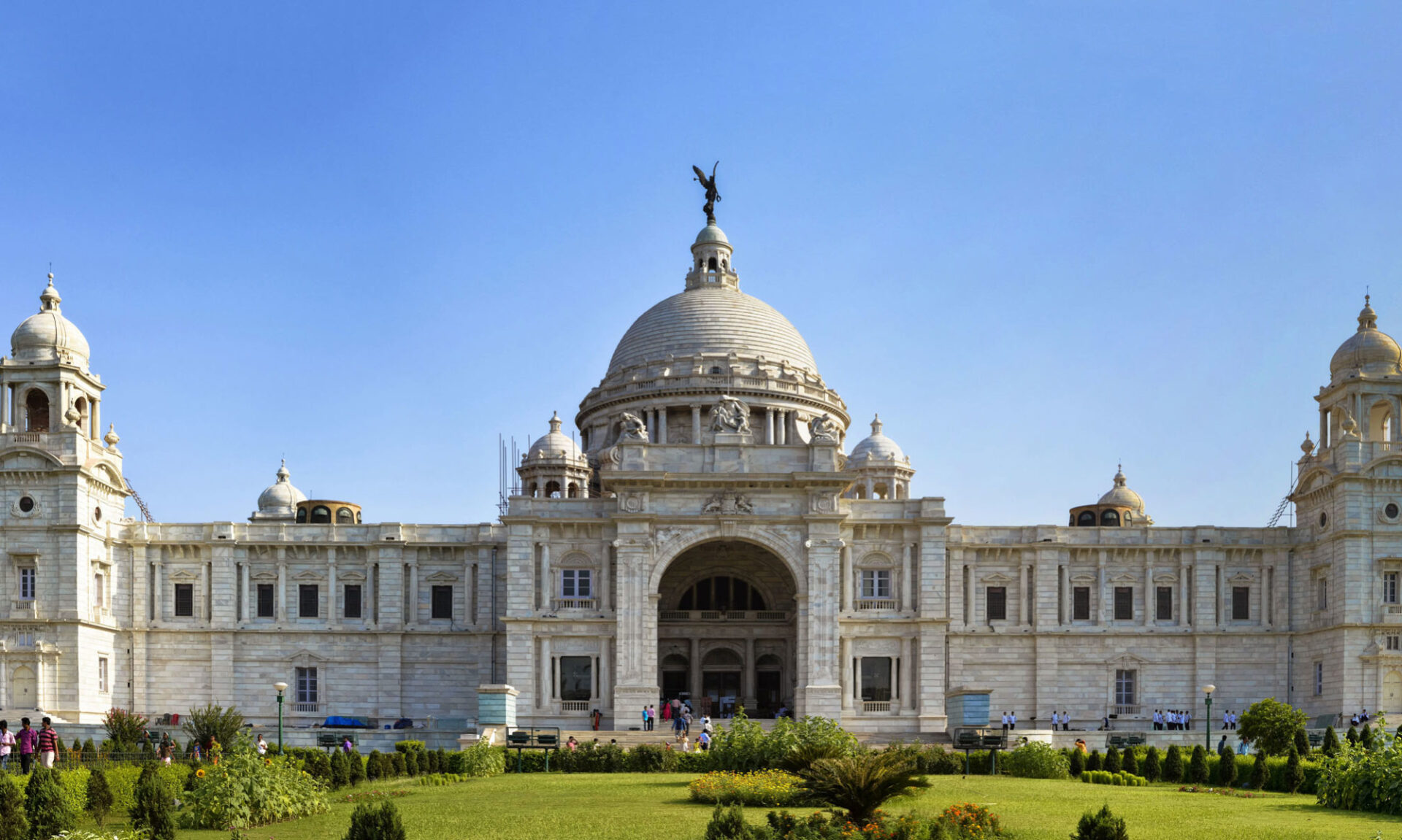
Victoria Memorial stands as Kolkata’s most magnificent architectural marvel and premier tourist destination, representing a unique fusion of British colonial and Indo-Saracenic design. Built between 1906 and 1921 in memory of Queen Victoria, this white marble monument houses one of India’s largest collections of British-era artifacts and serves as both a museum and cultural center. The memorial attracts over 5 million visitors annually with its sprawling 64-acre gardens, 25 galleries, and impressive collection of over 25,000 artifacts that chronicle India’s colonial history.
Victoria Memorial Kolkata: Complete Guide to India’s Most Magnificent Colonial Monument
Victoria Memorial stands majestically in the heart of Kolkata as one of India’s most spectacular architectural monuments and the world’s largest memorial dedicated to a monarch. This stunning white marble edifice, conceived by Viceroy Lord Curzon and completed in 1921, serves as both a testament to colonial history and a premier cultural institution that attracts millions of visitors annually.
Victoria Memorial Kolkata History – From Royal Vision to National Heritage
Lord Curzon’s Grand Vision for Queen Victoria
The story of Victoria Memorial begins with Queen Victoria’s death on January 22, 1901, which prompted Viceroy Lord Curzon to envision a grand tribute that would serve as both a monument and a repository of Indian history. Curzon declared his intention to create “a building, stately, spacious, monumental and grand” that would chronicle the marvels of British India. His vision extended beyond mere commemoration, aiming to establish a national gallery and cultural center that would educate future generations about the imperial legacy.
Construction Timeline: 1906-1921
Construction began when the Prince of Wales (later King George V) laid the foundation stone on January 4, 1906. The ambitious project required 15 years of meticulous craftsmanship, with the main structure completed by 1921 when Prince Edward VIII formally opened it to the public. The memorial was funded entirely through voluntary contributions from Indian princes, British officials, and the public, totaling approximately ₹1,05,00,000.
Transformation from Imperial Symbol to Cultural Center
Following India’s independence in 1947, Victoria Memorial evolved from a symbol of British imperial power into a celebrated heritage site under the Ministry of Culture, Government of India. Today, it functions as the premier art gallery and museum in Kolkata, focusing on preserving and disseminating knowledge about 18th, 19th, and 20th-century Indian history.
Architectural Marvel – Indo-Saracenic Design Excellence
William Emerson’s Masterpiece Design
The memorial’s architectural brilliance stems from Sir William Emerson’s innovative Indo-Saracenic design, which masterfully blends British classical elements with Mughal and Indian architectural traditions. The structure measures 338 by 228 feet and rises to an impressive height of 184 feet, deliberately designed to exceed the Taj Mahal’s central chamber diameter.
White Makrana Marble Construction
The entire monument is constructed from pristine white Makrana marble sourced from the same Rajasthan quarries that supplied stone for the Taj Mahal. The memorial required approximately 1,96,000 cubic feet of marble, giving it its distinctive luminous appearance that changes dramatically throughout the day.
The Angel of Victory and Central Dome
Crowning the magnificent central dome stands the iconic 16-foot-tall Angel of Victory, weighing 3 tons and crafted in bronze. This remarkable statue rotates when wind speeds exceed 20 kmph, serving as both an artistic masterpiece and a functional weather vane. The angel holds a laurel wreath and trumpet, symbolizing triumph and glory.
Victoria Memorial Museum – Treasures of British India
25 Galleries and 50,000 Artifacts
The museum houses an extensive collection of over 50,000 artifacts spread across 25 distinct galleries. Visitors can explore everything from oil paintings and watercolors to manuscripts, weapons, and personal belongings of historical figures. The collection provides comprehensive insights into colonial administration, Indian freedom movements, and cultural heritage.
Royal Gallery Highlights
The Royal Gallery showcases Queen Victoria’s personal artifacts, including her childhood pianoforte, writing desk, and chair from Windsor Castle. Portraits by renowned artists and twelve canvas lunettes by Frank Salisbury depicting key moments in Victoria’s life create an immersive royal experience.
Freedom Struggle Collections
The museum features significant collections related to India’s independence movement, including artifacts from the Indian National Army, personal belongings of Netaji Subhash Chandra Bose, and uniforms of the Rani Jhansi Regiment. These exhibits provide balanced perspectives on India’s journey to freedom.
Victoria Memorial Gardens – 64 Acres of Landscaped Beauty
Garden Design and Layout
The memorial is surrounded by meticulously maintained gardens spanning 64 acres, designed by Lord Redesdale and Sir David Prain. The landscape features formal flower beds, tree-lined pathways, and the famous French Garden decorated with marble busts of notable personalities.
Fountains and Water Features
The gardens include beautiful water bodies and fountains that create perfect reflection opportunities for photography enthusiasts. The large Kanchantala water body offers boating facilities for children and serves as a peaceful retreat area.
Photography Opportunities
The gardens provide exceptional photography opportunities, particularly during golden hour when the white marble creates stunning contrasts against the landscaped backdrop. Photography is permitted throughout the garden areas, though restrictions apply inside the museum galleries.
Victoria Memorial Timings and Entry Information
Museum and Gallery Hours
Victoria Memorial galleries operate from 10:00 AM to 6:00 PM, Tuesday through Sunday. The museum remains closed on Mondays and designated national holidays including Republic Day, Holi (Dol Yatra), Idu’l Fitr, Independence Day, Mahatma Gandhi’s Birthday, Dussehra (Vijay Dashami) and Christmas Day.
Garden Timings
The gardens welcome visitors daily from 6:00 AM to 6:00 PM, providing extended hours for morning walkers and evening visitors. Special annual passes are available for regular morning walkers at ₹2,000 (₹1,000 for senior citizens).
Entry Fee Structure
Museum entry fees are ₹50 for Indian nationals, ₹100 for SAARC country visitors, and ₹500 for other foreign nationals. Garden entry requires a separate ₹30 ticket, while school children in uniform and army personnel receive complimentary access.
Light and Sound Show Schedule
The spectacular light and sound show operates with seasonal timings: October to February shows run from 6:15-7:00 PM, while March to June shows start 30 minutes later. Tickets cost ₹100 and free for children bellow 3 years.
Visitor Experience and Facilities
What to Expect During Your Visit
A typical visit requires 1-4 hours to fully explore the museum galleries and gardens. Audio guides enhance the experience by providing detailed historical context, while the memorial’s 25 galleries offer diverse themes from royal artifacts to freedom struggle memorabilia.
Photography Rules and Guidelines
Photography is permitted in garden areas but restricted within museum galleries to preserve artifacts. Flash photography and tripods are prohibited throughout the complex. Recent policy changes have allowed limited photography in certain museum areas, excluding flash usage.
Visitor Amenities
The memorial provides essential amenities including clean restrooms, drinking water facilities, and cloakroom services at both main gates. A small museum shop offers souvenirs and educational materials for visitors.
How to Reach Victoria Memorial
Metro and Public Transport
The nearest metro stations are Maidan and Rabindra Sadan, both within walking distance of the memorial. Multiple bus routes connect the memorial to various parts of Kolkata, making it easily accessible via public transportation, Taxis and App-based cab services.
Victoria Memorial continues to captivate visitors with its architectural grandeur, rich historical collections, and serene gardens. Whether you’re a history enthusiast, architecture lover, or cultural explorer, this magnificent monument offers an unforgettable journey through India’s colonial past and artistic heritage.
Frequently Asked Questions About Victoria Memorial
Q: What are the Victoria Memorial timings?
A: Victoria Memorial museum is open from 10:00 AM to 6:00 PM, Tuesday to Sunday. Gardens are open daily from 5:30 AM to 6:15 PM.
Q: What is the entry fee for Victoria Memorial?
A: Museum entry costs ₹50 for Indians, ₹100 for SAARC countries, and ₹500 for other foreign nationals. Garden entry is ₹30 per person.
Q: Is photography allowed in Victoria Memorial?
A: Photography is permitted in the gardens but restricted inside the museum galleries. Flash photography and tripods are prohibited.
Q: How much time is needed to visit Victoria Memorial?
A: Plan for 1-2 hours to thoroughly explore both the museum galleries and gardens.
Q: What is the best time to visit Victoria Memorial?
A: Visit during November to February for pleasant weather. Early morning or late afternoon visits offer the best lighting for photography.
Q: Is there a light and sound show at Victoria Memorial?
A: Yes, seasonal light and sound shows run in Bengali and English with varying timings. Tickets cost ₹100 and free for children bellow 3 years.
Q: Can I carry food inside Victoria Memorial?
A: Food is allowed in the garden areas but prohibited inside the museum galleries.
Q: Are pets allowed in Victoria Memorial?
A: Pets are generally not permitted inside the museum, though policies may vary for garden areas.
Q: What are the nearest metro stations to Victoria Memorial?
A: Maidan and Rabindra Sadan metro stations are the closest, both within walking distance.
Q: Is Victoria Memorial wheelchair accessible?
A: Yes, the memorial provides wheelchair accessible entry to accommodate differently-abled visitors.